Introduction: The Endless Allure of Games
Games have always held a special place in human culture. From ancient board games carved from stone to the latest virtual reality experiences, games have evolved in ways that reflect our creativity, intelligence, and desire for entertainment. They are not just a pastime; they are a medium for storytelling, competition, social bonding, and even personal growth. The world of games is vast, spanning multiple genres, platforms, and styles, each offering unique experiences that appeal to different kinds of players. In this blog, we will explore what makes games captivating, some unique gaming experiences, and how games continue to influence modern culture.
The Psychology of Play
At its core, gaming taps into human psychology. The act of playing games triggers a release of dopamine, the brain’s “feel-good” chemical, providing a sense of reward and accomplishment. Games also engage problem-solving skills, strategic thinking, and creativity. For example, puzzle games challenge players to think logically, while role-playing games immerse players in complex narratives that require decision-making and moral judgment. Beyond entertainment, games can be therapeutic, improving cognitive skills and even helping reduce stress and anxiety.
The Evolution of Games: From Traditional to Digital
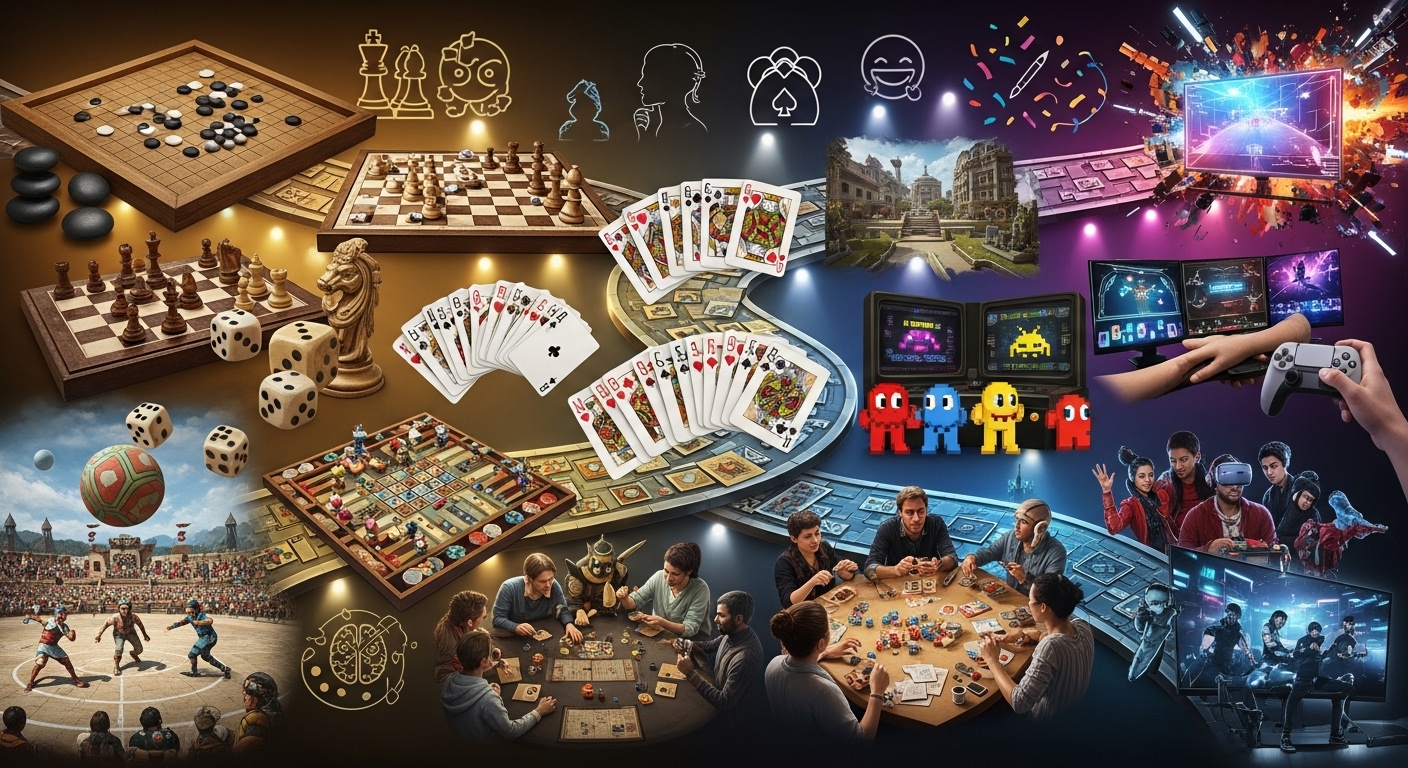
Games have a rich history that spans centuries. Early humans engaged in simple games like dice, stones, and board games, which were not only recreational but also social and sometimes spiritual. With the advent of technology, games transformed into digital formats. The first video games appeared in the 1950s and 1960s, with simple graphics and mechanics. Today, modern games feature complex worlds, photorealistic graphics, and immersive storytelling. The transition from traditional games to digital experiences shows how innovation can redefine a medium while preserving its core appeal.
Games as a Storytelling Medium
One of the most remarkable aspects of games is their ability to tell stories. Unlike movies or books, games allow players to actively participate in the narrative. Role-playing games, open-world adventures, and narrative-driven games create worlds where every choice matters. Players can explore character development, moral dilemmas, and branching storylines in ways that traditional media cannot replicate. The storytelling in games is unique because it is interactive, allowing each player’s journey to be slightly different, making the experience personal and memorable.
The Rise of Indie Games
While big-budget AAA titles often dominate headlines, indie games have emerged as a significant force in the gaming industry. Indie developers take creative risks, experimenting with unconventional gameplay, art styles, and narratives. Titles like “Journey,” “Hollow Knight,” and “Celeste” demonstrate that small teams can produce experiences that rival or even surpass larger productions in emotional impact and originality. Indie games often focus on unique mechanics, minimalist design, or thought-provoking themes that challenge players in ways mainstream games rarely do.
Multiplayer and Social Gaming
One of the most transformative aspects of modern gaming is the ability to connect with others. Multiplayer games, whether cooperative or competitive, foster social interaction and teamwork. Online platforms allow players to meet people from around the world, forging friendships and rivalries that extend beyond the game itself. Social gaming is not limited to competitive games; even casual games often include social features like shared achievements, collaborative challenges, and community events. The social aspect of gaming has created communities that are vibrant, supportive, and influential in shaping gaming culture.
Games That Push the Boundaries
Certain games stand out for their innovation and willingness to break traditional molds. Games like “Minecraft” offer infinite creativity, allowing players to build entire worlds from scratch. Others, such as “Portal” or “The Witness,” challenge players with mind-bending puzzles that combine logic, physics, and storytelling. Then there are experimental games like “Everything,” where players can inhabit and control objects of all sizes, exploring philosophical ideas in interactive form. These unique games show that the medium is not limited to entertainment; it can also inspire creativity, critical thinking, and curiosity.
The Impact of Games on Culture
Games have become a significant cultural force, influencing art, fashion, and even music. Popular titles shape trends, inspire fan art, cosplay, and conventions, and even affect mainstream storytelling in movies and literature. Esports, a form of professional competitive gaming, has grown into a global phenomenon, drawing millions of viewers and offering players professional careers. Games have also sparked discussions about ethics, representation, and social issues, demonstrating that they are not just trivial entertainment but a reflection of contemporary society.
Educational and Serious Games
Beyond fun and competition, games are increasingly used for education and training. Serious games simulate real-world scenarios to teach skills ranging from medical procedures to military tactics. Educational games make learning engaging by turning abstract concepts into interactive experiences. For instance, games can teach history through immersive storytelling, mathematics through problem-solving challenges, or environmental science through simulations of ecosystems. This demonstrates the versatility of games and their potential to impact learning in profound ways.
Virtual Reality and the Future of Gaming
The next frontier of gaming is virtual reality (VR) and augmented reality (AR), which offer immersive experiences that were previously unimaginable. VR transports players into fully interactive 3D worlds, allowing them to feel present in the game environment. AR overlays digital content on the real world, creating new ways to play and interact with surroundings. These technologies expand the boundaries of gaming, creating experiences that blend imagination and reality. The future promises even more innovation, including AI-driven worlds, adaptive storytelling, and fully interactive simulations.
The Importance of Accessibility
As games evolve, accessibility has become an important consideration. Developers are increasingly designing games that accommodate players with disabilities, providing customizable controls, visual and auditory aids, and adaptive gameplay mechanics. Accessibility ensures that gaming is inclusive, allowing more people to enjoy the medium and benefit from its cognitive, social, and emotional rewards. The focus on accessibility reflects a broader cultural shift toward inclusivity and diversity within the gaming community.
The Emotional Impact of Games
Games have the power to evoke a wide range of emotions, from joy and excitement to sadness and introspection. Players can experience the thrill of victory, the tension of survival, or the satisfaction of solving a complex puzzle. Story-driven games can create deep emotional connections to characters and narratives, leaving lasting impressions long after the game is over. This emotional engagement is a testament to the medium’s unique ability to blend interactivity with storytelling, creating experiences that are both personal and transformative.
Conclusion: Games as an Ever-Evolving Art Form
The world of games is a dynamic, ever-evolving landscape that continues to push the boundaries of creativity, technology, and human connection. Games are more than just entertainment; they are a medium for storytelling, education, social interaction, and personal growth. Whether it is a massive open-world adventure, a competitive multiplayer experience, or a small indie game with a profound message, games have something to offer everyone. As technology advances and the industry continues to innovate, the possibilities for gaming are limitless, promising new experiences that will continue to captivate and inspire players for generations to come.