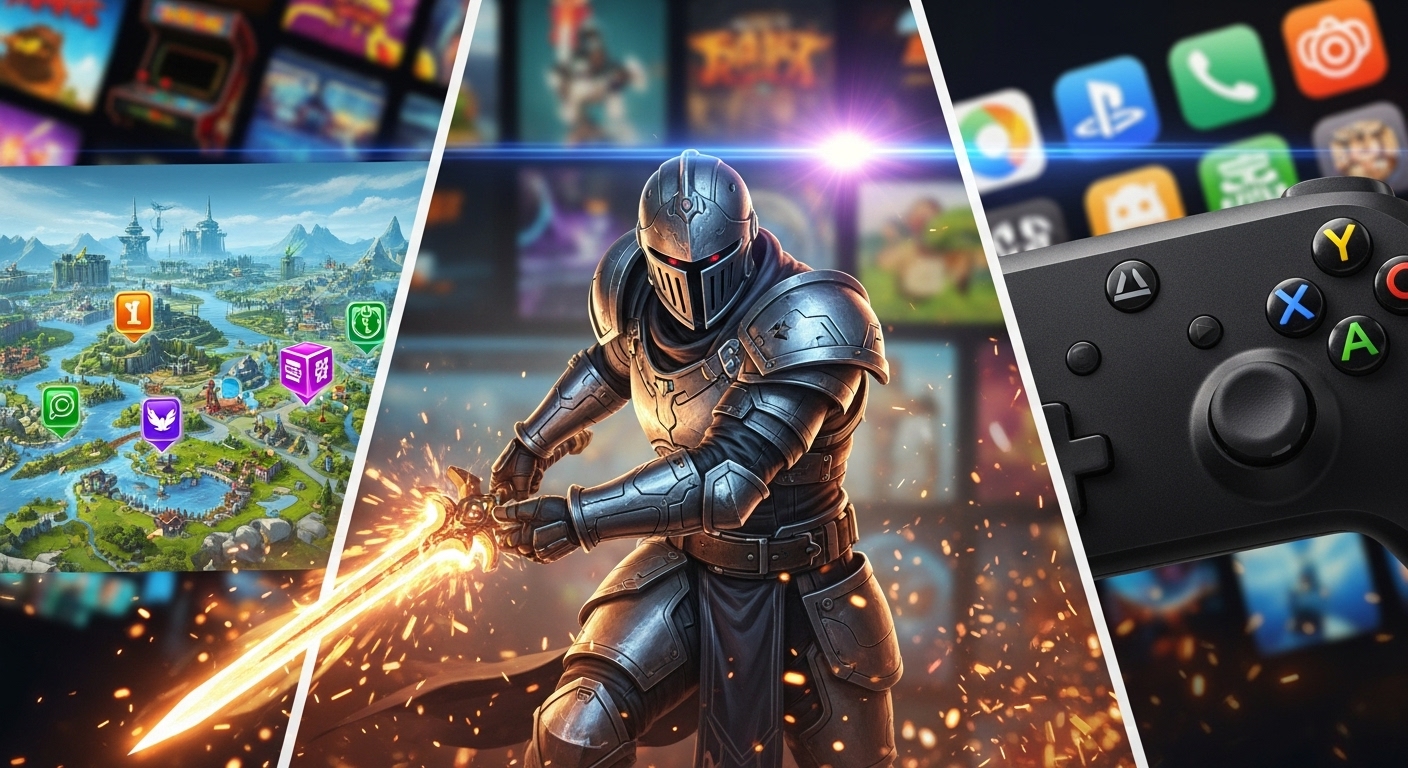
Introduction: When Games Become More Than Entertainment
Games have evolved far beyond simple pastimes. What once began as pixelated diversions on small screens has transformed into a powerful medium for storytelling, creativity, social connection, and even self-reflection. Today, games are not just about winning or losing; they are about experiencing worlds, emotions, and ideas that can linger long after the screen goes dark. Some games stand apart from the rest because they challenge traditional design, experiment with mechanics, or tell stories in ways no other medium can. These are games with unique identities, experiences that redefine what play can mean.
This blog explores games that break conventions and offer something truly different. Rather than focusing on genres or platforms, it examines how uniqueness in games emerges through storytelling, mechanics, art, emotion, and player choice.
The Power of Original Game Concepts
At the heart of every unique game lies a strong concept. While many games follow familiar formulas, truly distinctive games begin with a question: what if play worked differently? These concepts may seem risky, but they often lead to the most memorable experiences.
Some games remove traditional goals entirely, asking players to explore rather than conquer. Others limit the tools available, forcing creativity instead of reflex-based mastery. By challenging expectations, these games encourage players to think differently about interaction, success, and fun. Original concepts often lead to strong emotional responses, because players are not relying on habits formed from years of gaming.
Uniqueness in concept is not about being strange for the sake of it; it is about purposefully reimagining how a player engages with a digital world.
Storytelling That Breaks the Rules
One of the most powerful ways games stand out is through unconventional storytelling. Unlike films or books, games allow stories to be shaped by player actions. Some unique games take this further by questioning the role of the player within the narrative itself.
In certain experiences, the game may respond directly to player behavior, remembering choices and referencing them later in unexpected ways. Other games present fragmented narratives, where meaning emerges slowly as players piece together clues through exploration. There are also games that tell stories without words, relying solely on visuals, sound, and movement to communicate emotion.
These approaches demonstrate that storytelling in games does not need to follow a linear path. Instead, it can be interactive, personal, and deeply immersive, making players feel like participants rather than observers.
Innovative Mechanics That Redefine Interaction
Gameplay mechanics are the language of games, and unique titles often invent new ways to speak to the player. Instead of refining existing systems, these games introduce mechanics that feel unfamiliar at first but become intuitive over time.
Some games manipulate time, allowing players to rewind, pause, or experience events out of order. Others blend genres, combining puzzle-solving with narrative exploration or strategy with emotional decision-making. There are even games that limit control intentionally, forcing players to adapt to constraints rather than overcome them.
These mechanics are not gimmicks. When designed well, they support the game’s theme and message. A mechanic about loss might remove abilities permanently, while a game about memory might distort environments as time passes. In this way, mechanics become storytelling tools rather than mere challenges.
Artistic Styles That Create Identity
Visual and audio design play a crucial role in making games memorable. Unique games often adopt artistic styles that set them apart immediately, whether through hand-drawn visuals, minimalist design, or bold use of color and sound.
Some games resemble moving paintings, while others embrace abstract or surreal imagery. Music and sound design can be equally distinctive, using silence, unconventional instruments, or reactive audio that changes based on player behavior. These artistic choices shape mood and atmosphere, guiding emotional responses without the need for explicit explanation.
A strong artistic identity not only enhances immersion but also ensures that the game remains recognizable long after it has been played. It becomes part of the player’s memory, associated with specific feelings and moments.
Emotional Experiences and Personal Impact
What truly elevates a game into something unique is its emotional impact. While many games aim for excitement or tension, some focus on quieter emotions such as sadness, loneliness, hope, or empathy. These experiences resonate deeply because they reflect real human feelings.
Certain games explore themes like grief, mental health, identity, or relationships, using interactivity to make these themes personal. Instead of watching a character struggle, players take part in that struggle, making choices that carry emotional weight. The result is a connection that feels intimate and meaningful.
These games often stay with players long after completion, sparking reflection and conversation. They prove that games can be just as emotionally powerful as any other art form.
Player Choice and Meaningful Consequences
Choice is a defining feature of games, but unique titles treat choice with care and intention. Rather than offering superficial options, they design decisions that genuinely matter, even if the consequences are subtle.
In some games, choices affect relationships rather than outcomes, changing how characters perceive the player. In others, the absence of choice itself becomes meaningful, highlighting themes of powerlessness or inevitability. There are also games where players may not immediately understand the impact of their actions, only realizing their significance much later.
By respecting the player’s agency, these games create a sense of responsibility and immersion. Every decision feels like part of a larger narrative, reinforcing the idea that play is not just about control, but about consequence.
The Role of Experimentation in Game Design
Unique games often emerge from a willingness to experiment. Independent developers, in particular, have embraced experimentation as a way to explore ideas that larger studios may avoid. This creative freedom has led to games that challenge norms and expand the boundaries of the medium.
Experimentation does not always lead to perfection, but it does lead to growth. Even flawed games can introduce ideas that inspire future designs. The willingness to take risks is essential for the evolution of games as an art form.
Through experimentation, developers discover new ways to engage players, tell stories, and evoke emotion. These discoveries shape the future of gaming, influencing both small projects and major releases.
Why Unique Games Matter in a Crowded Industry
In an industry filled with sequels and familiar formulas, unique games serve as reminders of what makes the medium special. They demonstrate that games do not need massive budgets or cutting-edge technology to be impactful. Creativity, intention, and passion are often enough.
These games also attract diverse audiences, including people who may not identify as traditional gamers. By offering experiences that prioritize story, emotion, or exploration, they make gaming more accessible and inclusive.
Unique games push the industry forward, encouraging innovation and challenging assumptions about what games can be. They inspire both players and creators to look beyond expectations and embrace possibility.
The Lasting Legacy of Playing Differently
Games with unique identities leave lasting impressions. They are discussed, analyzed, and remembered not because they were the biggest or most realistic, but because they dared to be different. These games become reference points, shaping how players think about the medium and what they hope to experience next.
As technology continues to evolve, the potential for uniqueness in games grows even greater. New tools allow for deeper interaction, richer worlds, and more personal storytelling. Yet the core of uniqueness will always lie in creativity and vision, not technology alone.
Conclusion: Celebrating Games That Dare to Be Unique
Games are no longer confined to simple definitions. They can be art, stories, experiments, and emotional journeys. Unique games remind us that play is a powerful form of expression, capable of surprising, challenging, and moving us in ways we never expect.
By embracing originality in concept, storytelling, mechanics, art, and emotion, these games redefine what it means to play. They invite players not just to win, but to feel, reflect, and explore. In celebrating games that dare to be different, we celebrate the limitless potential of the medium itself.