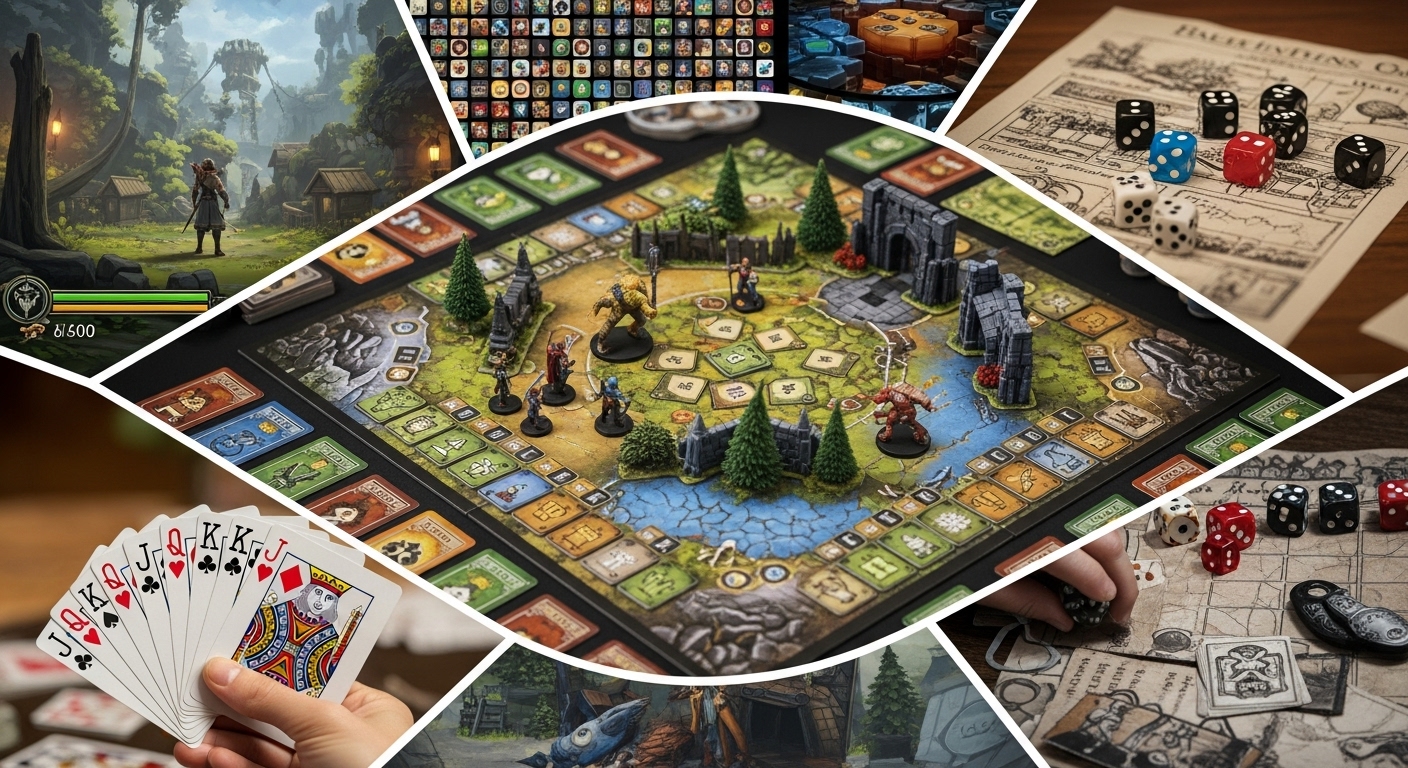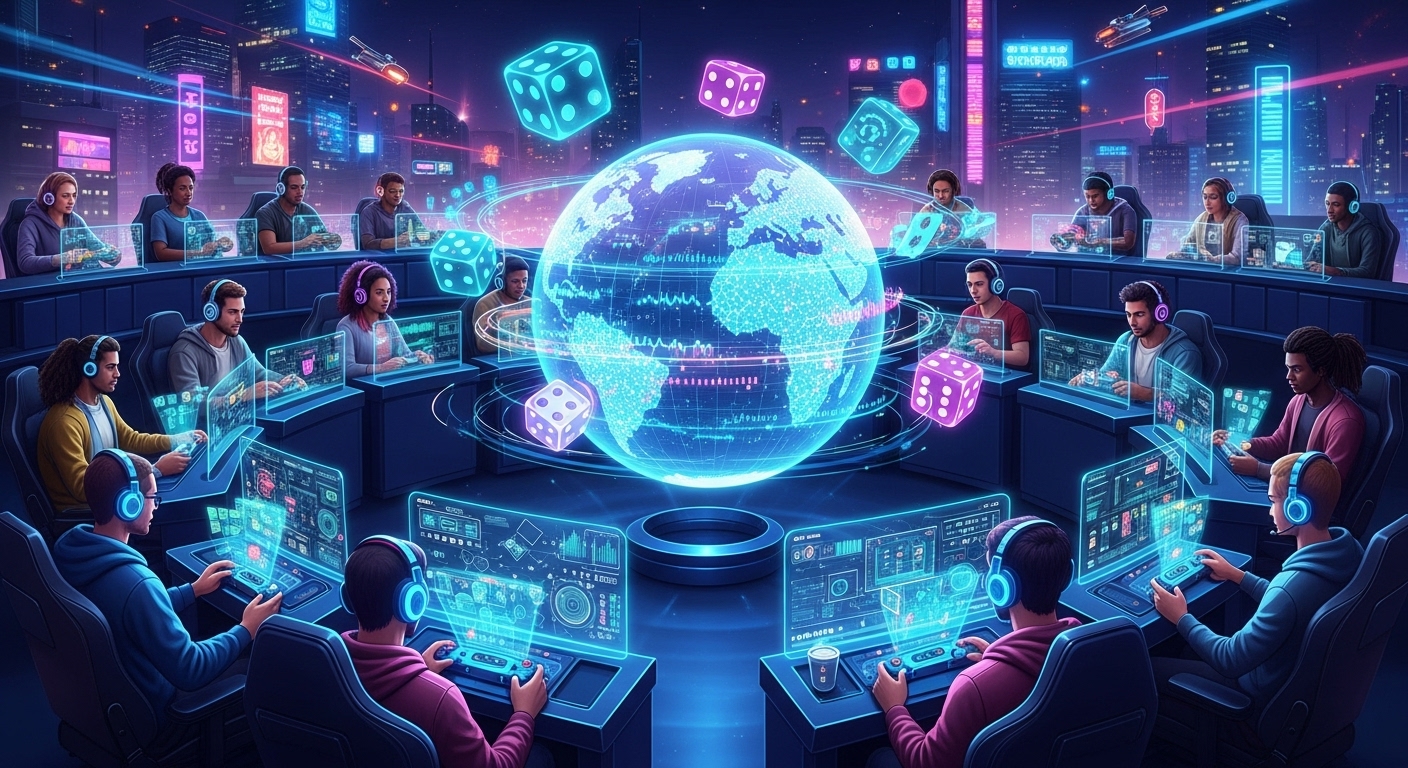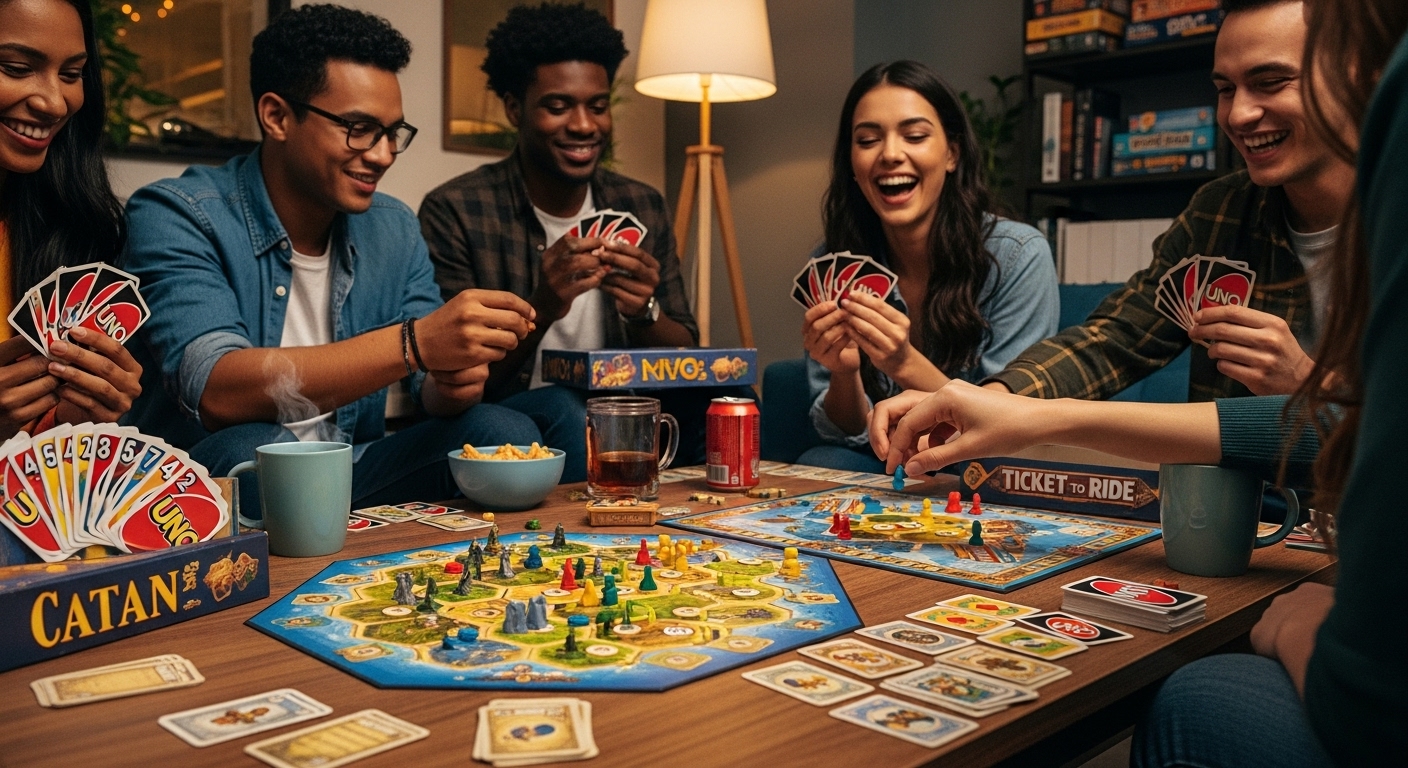
Games have always been more than just a form of entertainment. They are a medium for storytelling, a platform for creativity, and often a mirror reflecting human psychology and society. While mainstream titles dominate headlines, a fascinating world of games exists that challenges conventions, surprises players, and offers experiences unlike any other. These games push boundaries not just in graphics or gameplay, but in concept, design, and emotional resonance. In this post, we explore games that stand out because they dare to be different.
The Power of Unique Mechanics
What truly sets a game apart is its mechanics. While many games follow established formulas like first-person shooting, open-world exploration, or role-playing progression, unique mechanics often redefine how players interact with the virtual world. Games such as Portal introduced physics-based puzzle solving in a way that transformed the player’s thinking. Instead of simply running and shooting, players must manipulate portals to traverse space, challenging spatial reasoning and creative problem-solving.
Mechanics like this are not just tools for gameplay—they are storytelling devices. They force players to think differently and engage more deeply, turning simple actions into complex experiences. Another example includes rhythm-based games where timing and musical intuition drive progression, creating a fusion of music and gameplay that immerses players in both senses simultaneously.
Narrative Experiments That Break the Mold
Beyond mechanics, narrative experimentation has allowed games to explore themes rarely touched by traditional media. Some games abandon linear storytelling altogether, opting for a more interactive and emergent narrative approach. These games place the player at the center of the story, letting choices, exploration, and even mistakes shape the outcome.
Games like Journey exemplify this approach. Without dialogue or written instructions, the game relies on visual storytelling, environmental cues, and emotional resonance. Players find themselves on a solitary journey through vast landscapes, encountering others briefly in shared experiences. The result is a deeply personal story that emerges uniquely for every player, emphasizing the emotional weight of connection, solitude, and perseverance.
World-Building Beyond Imagination
Some games stand out not because of what the player does, but because of the worlds they inhabit. Unique world-building can turn a simple game into an unforgettable adventure. Titles like The Witness present a world that is both beautiful and mysterious, filled with puzzles integrated seamlessly into the environment. Players explore an island of secrets, learning the rules of the world organically through observation and experimentation. This type of design creates an experience where the environment itself is a character, guiding players without overt instruction.
Similarly, games like No Man’s Sky offer procedural generation, creating near-infinite worlds for exploration. Each planet is a canvas, brimming with unique flora, fauna, and landscapes. Such games provide players with a sense of awe and discovery, reminding us that exploration and curiosity can be as engaging as any scripted story.
Emotional Resonance and Player Empathy
Unique games often excel in creating emotional connections. Unlike traditional games where success is measured by scores or achievements, these experiences prioritize feelings, empathy, and reflection. Games like Gris use art, music, and gameplay as a cohesive emotional journey. Players move through a world of color and abstraction, experiencing themes of loss, grief, and hope in a non-verbal yet profoundly impactful way.
This emotional engagement is not limited to indie titles. Even larger productions have embraced mechanics and storytelling that evoke empathy. Games can simulate the consequences of moral choices, show the impact of environmental destruction, or let players experience perspectives outside their own, creating a powerful narrative resonance that lingers long after the game is over.
Innovative Multiplayer and Social Experiences
Multiplayer gaming is another frontier where uniqueness shines. Beyond the traditional competitive or cooperative formats, some games experiment with social interaction itself as the core gameplay. Titles like Among Us have revolutionized social deduction, making trust, deception, and communication central to the experience. The game’s simplicity masks a deeply engaging social dynamic where reading human behavior is as important as completing tasks.
Similarly, Journey’s multiplayer implementation is subtle yet profound. Players encounter strangers in the game world, unable to communicate verbally, but still collaborate through movement and actions. This minimalist approach creates an organic sense of companionship, highlighting how design can manipulate emotional and social experience in ways conventional games rarely attempt.
Challenging Conventional Difficulty
Difficulty in gaming is often binary: either a game is easy or punishingly hard. Unique games approach challenge differently, sometimes redefining what difficulty means. Puzzle games like Baba Is You force players to think in abstract, logical ways, turning the very rules of the game into manipulable objects. The satisfaction comes not from reflexes, but from creativity and insight, making the sense of accomplishment deeply rewarding.
On the other end of the spectrum, survival games introduce unpredictability and emergent challenges, placing players in environments where adaptability is key. The thrill arises not from mastering a set path but from responding dynamically to circumstances, turning failure into learning and exploration.
Artistic Expression in Games
Some of the most unique games blur the lines between gaming and art. Games like Okami draw inspiration from traditional painting, incorporating brushstroke mechanics as part of gameplay. Players interact with the environment as if painting it into existence, merging aesthetic beauty with interactive engagement. These games remind us that video games are not just entertainment—they are an art form capable of expressing ideas, emotions, and culture.
Pixel art, minimalism, and unconventional visual styles also contribute to uniqueness. Games can use limited resources creatively to evoke nostalgia, beauty, or abstraction, proving that originality does not depend on high-end graphics but on vision and execution.
The Appeal of Nonlinear and Open-Ended Design
Nonlinear gameplay is another hallmark of games that stand out. Unlike story-driven games with fixed paths, these experiences give players freedom to explore, experiment, and define their journey. Titles like Minecraft epitomize this approach, offering no defined objectives beyond those players create themselves. The sandbox design encourages creativity, collaboration, and self-expression, allowing each player to craft their own narrative and goals.
Open-ended design fosters long-term engagement, as the possibilities are limited only by imagination. Players become co-creators, building worlds, systems, and experiences that can rival those of traditional game developers.
The Role of Innovation in Indie Games
Many of the most unique experiences come from indie developers. Free from commercial pressures, indie games can afford to take risks, exploring unconventional mechanics, themes, and narratives. Titles like Hades reinvent the roguelike genre with tight gameplay, compelling story arcs, and a character-driven experience that feels fresh even after repeated playthroughs.
Indie developers often tackle subjects ignored by mainstream games, such as mental health, personal identity, or philosophical questions. This willingness to experiment expands what games can be, proving that innovation often thrives where creativity is unrestrained by expectation.
Why Unique Games Matter
Unique games matter because they remind players that gaming is not just about entertainment—it is about experience. They challenge conventions, provoke thought, and create emotional connections that persist long after the screen is turned off. By embracing creativity, these games enrich the medium, pushing the boundaries of what is possible in interactive storytelling, design, and human connection.
In a world saturated with formulaic experiences, games that dare to be different stand as testaments to imagination and vision. They invite players to explore new mechanics, embrace emotional journeys, and engage with worlds unlike any they have seen before. These are the games that define the future of the medium, not through spectacle alone, but through the depth, innovation, and humanity they bring to the digital realm.
Conclusion
Exploring unique games reveals a spectrum of creativity that challenges assumptions and reshapes expectations. From innovative mechanics and nonlinear storytelling to emotional resonance and artistic expression, these games offer experiences far beyond the ordinary. They invite players to think differently, feel deeply, and participate actively in worlds crafted with imagination and intention.
The next time you pick up a controller or sit at a keyboard, consider venturing off the beaten path. Seek out the games that defy convention, that push boundaries, that ask you to engage with play in a new way. In doing so, you will discover not just new forms of entertainment, but new ways of seeing, thinking, and experiencing the world—one uniquely designed game at a time.