Introduction
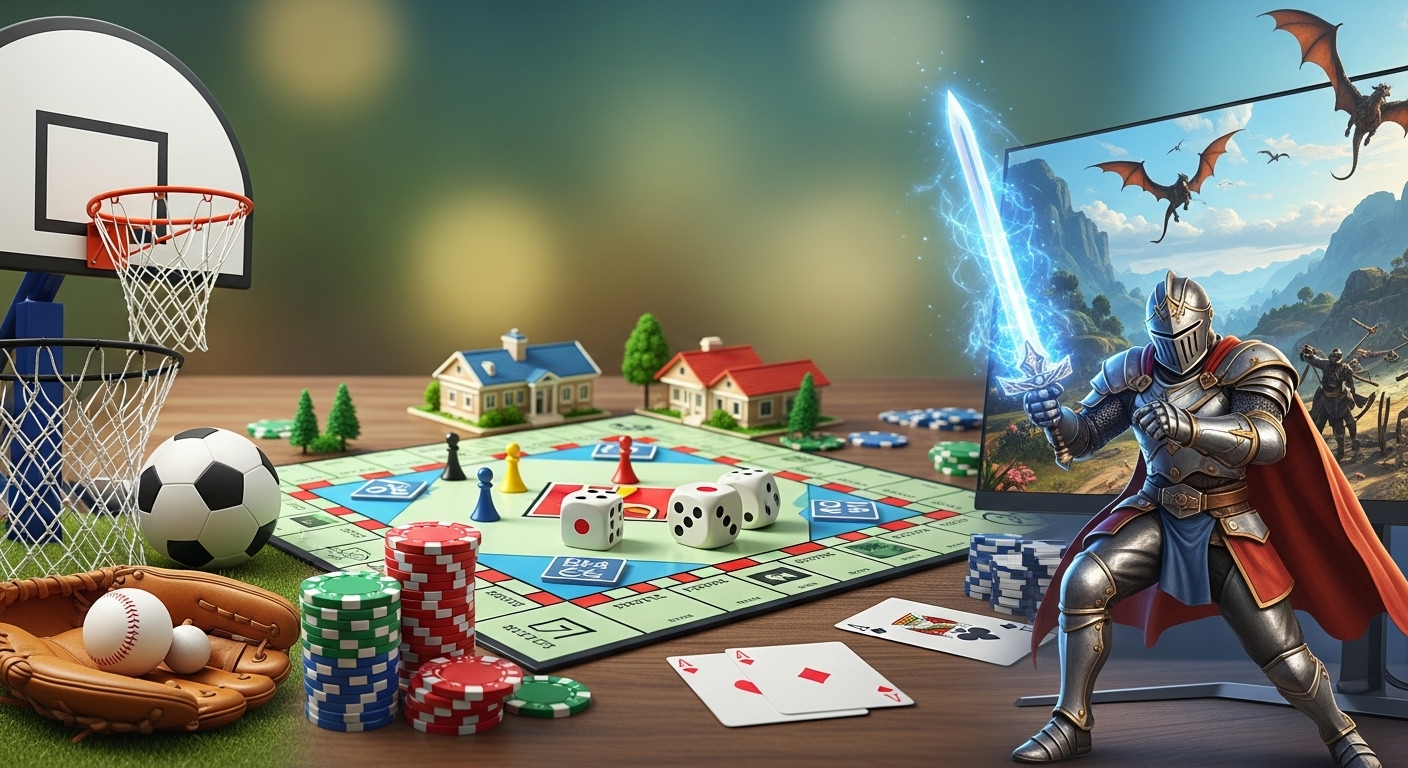
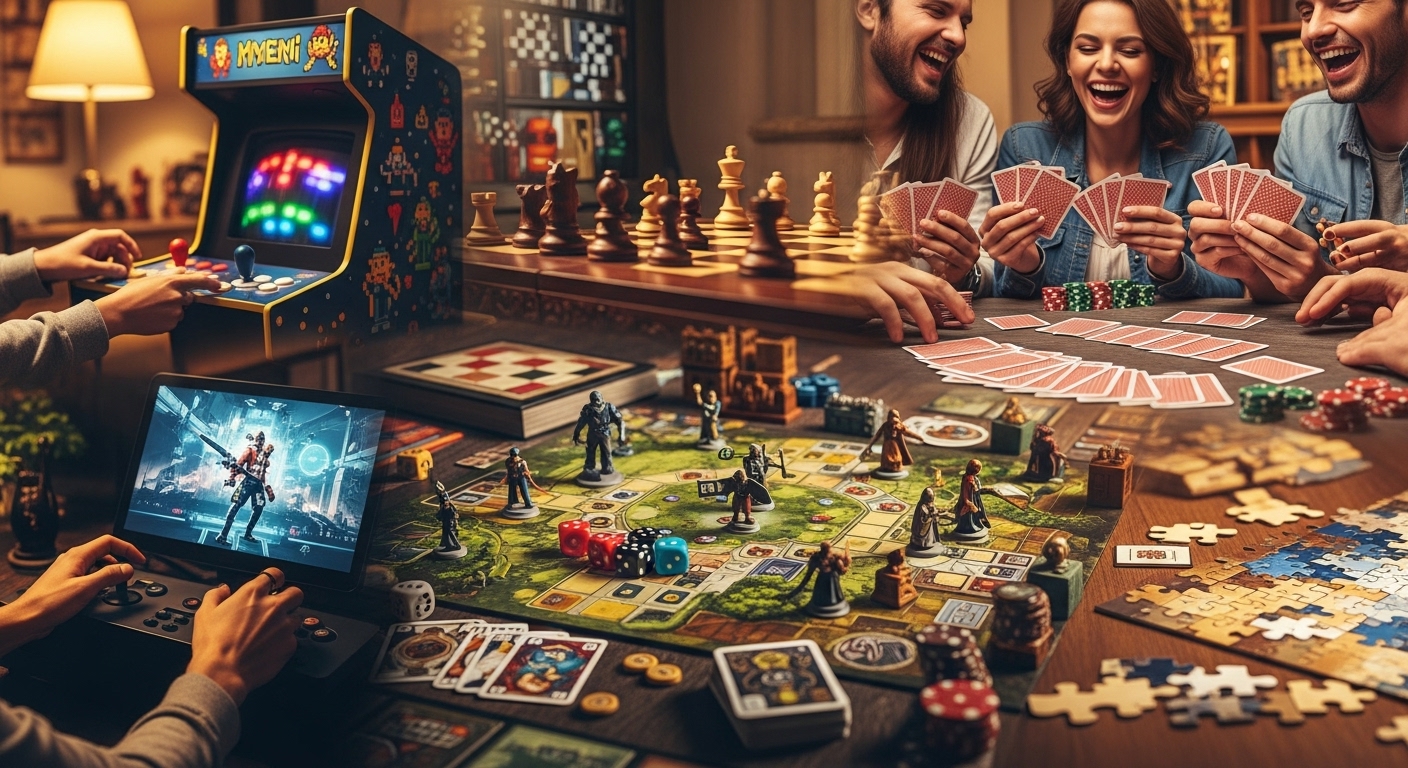
Games are a universal aspect of human culture, transcending age, culture, and geography. Whether it’s a competitive sport, a tabletop board game, or a video game, people across the world have always found ways to engage in playful competition, collaboration, and exploration. Games have become more than just pastimes—they are a part of our social fabric, our education systems, and our entertainment industry. From the ancient games of kings and warriors to the virtual worlds of modern-day gaming, the evolution of games has mirrored our technological advancements, our creativity, and our collective imagination. This blog explores the rich history, impact, and future of games, examining how they have shaped our lives and what lies ahead for this ever-growing industry.
The Ancient Roots of Gaming
The concept of games has been with humanity since the dawn of civilization. Evidence suggests that games were an essential part of ancient cultures, serving as both entertainment and a form of cultural expression. The ancient Egyptians, for example, played Senet, one of the oldest known board games, which was believed to have spiritual significance. Likewise, in ancient China, the game of Go was invented, a strategy-based game still popular today. These early games often mirrored aspects of life such as war, religion, and societal roles, and were played by all social classes, from peasants to royalty.
The Greeks and Romans also played a significant role in shaping the history of games. The Greeks introduced competitive games through the Olympic Games, which were not just athletic competitions but a celebration of skill, sportsmanship, and human excellence. Similarly, Roman gladiatorial contests, while violent, were a form of public entertainment that also spoke to the culture’s fascination with strength, bravery, and conflict.
The fact that games have been a part of society for thousands of years shows just how ingrained play is in human behavior. As technology evolved, so too did the ways we played.
The Birth of Modern Gaming: Video Games Enter the Scene
The 20th century marked a dramatic shift in the world of games, thanks to the invention of the electronic computer. The early days of video gaming were defined by simple, yet revolutionary, arcade games. In 1972, Atari’s Pong became the first commercially successful arcade video game. Its simplicity—two paddles and a bouncing ball—was enough to captivate players and draw them into the digital world of gaming. The success of Pong sparked an entire industry dedicated to creating video games, and the arcade game era of the 1970s and 1980s soon followed.
The 1980s saw the birth of home consoles, which made video gaming accessible to the masses. With systems like the Nintendo Entertainment System (NES) and the Sega Genesis, players could enjoy games like Super Mario Bros., Pac-Man, and Sonic the Hedgehog in their own living rooms. These consoles brought video games into the mainstream, turning them from a niche activity into a widespread form of entertainment.
The Golden Age of Gaming: The 1990s and Early 2000s
The 1990s and early 2000s are often referred to as the “golden age” of gaming, as this period saw major innovations in both hardware and software. The development of 3D graphics and the introduction of powerful gaming consoles like the Sony PlayStation and Nintendo 64 changed the landscape of gaming forever. These systems gave birth to iconic titles such as The Legend of Zelda: Ocarina of Time, Final Fantasy VII, and Gran Turismo, which became cultural touchstones and raised the standard for what video games could achieve in terms of story, visuals, and gameplay.
The 1990s also marked the rise of personal computers as a platform for gaming. PC games like Doom and Warcraft introduced fast-paced action and multiplayer experiences that would later evolve into the modern-day esports phenomenon. Online gaming began to take shape with titles like Diablo II and EverQuest, where players could connect with others around the world and engage in cooperative or competitive gameplay. This laid the foundation for the multiplayer, online-driven games that dominate the gaming landscape today.
The Mobile Gaming Revolution
The rise of smartphones in the late 2000s brought about the next major shift in gaming. Suddenly, gaming was no longer confined to living rooms or arcades—people could play games anywhere and at any time. Mobile games like Angry Birds, Candy Crush, and Clash of Clans became global sensations, attracting millions of casual players and expanding the gaming audience beyond traditional console gamers.
Mobile gaming revolutionized the industry by making it more accessible. People didn’t need expensive consoles or high-end PCs to enjoy gaming—they just needed a smartphone or tablet. The success of mobile games also led to the rise of “freemium” models, where players could download and play games for free but had the option to purchase in-game items or features. This model has become ubiquitous in mobile gaming and has contributed to the sector’s immense profitability.
Esports and Competitive Gaming
In parallel with the rise of mobile and casual gaming, competitive gaming, or esports, has exploded in popularity. What started as small-scale tournaments has grown into a multi-billion-dollar industry, with professional players, teams, and global events. Games like League of Legends, Dota 2, Fortnite, and Counter-Strike: Global Offensive have brought competitive gaming to the forefront, with millions of viewers tuning in to watch high-level gameplay.
Esports has not only created new career opportunities for gamers but has also turned gaming into a spectator sport. Esports events, such as the League of Legends World Championship and The International (the world championship for Dota 2), draw huge crowds and offer massive cash prizes. The growth of esports has led to the establishment of professional leagues, sponsorship deals, and broadcasting agreements with platforms like Twitch, making esports a global phenomenon in its own right.
Gaming as a Social Experience
In the digital age, games have increasingly become a social experience. Multiplayer games allow players to connect with friends and strangers alike, working together to complete objectives or competing against one another in real-time. Online multiplayer games like Fortnite, Call of Duty, and World of Warcraft foster a sense of community, where players form teams, join clans, and build lasting friendships.
This social aspect of gaming has also contributed to the rise of “streaming,” where players broadcast their gameplay to audiences around the world. Platforms like Twitch and YouTube Gaming have enabled players to share their experiences, interact with viewers, and even build careers as professional streamers. The rise of streaming has blurred the lines between gamer and entertainer, creating a new type of content creator who can connect with audiences in real time.
The Future of Gaming: Virtual Reality and Beyond
As gaming technology continues to advance, the next frontier is virtual reality (VR) and augmented reality (AR). VR has the potential to completely revolutionize how we experience games by immersing players in fully interactive 3D environments. VR headsets like the Oculus Rift and HTC Vive have already begun to show the possibilities of this new medium, offering experiences that range from action-packed shooters to relaxing puzzle games. Games like Beat Saber and Half-Life: Alyx have demonstrated the potential of VR to provide a fully immersive, interactive experience.
AR, on the other hand, blends the virtual and real worlds, allowing players to interact with digital objects superimposed onto their physical environment. Games like Pokémon Go have already proven the potential of AR, encouraging players to explore their surroundings while interacting with virtual creatures. As AR and VR technologies continue to evolve, they promise to create new, groundbreaking experiences that will push the boundaries of gaming even further.
The Impact of Games on Society
Beyond entertainment, games have a profound impact on society. They are increasingly being used as educational tools, helping students learn subjects like math, history, and language through interactive gameplay. Games like Minecraft have been used in classrooms to teach everything from physics to architecture, while others like SimCity and Civilization teach strategic thinking and resource management.
Furthermore, games have proven to be a powerful medium for social change. Many game developers use their platforms to address important issues such as mental health, social justice, and environmental sustainability. Games like Hellblade: Senua’s Sacrifice tackle topics like mental illness, while others like This War of Mine highlight the struggles of civilians in war-torn areas. In this way, games have become a platform for raising awareness, promoting empathy, and sparking important conversations.
Conclusion
From ancient board games to modern-day virtual worlds, the evolution of games has been an exciting journey, shaped by technological advancements and human creativity. Games have moved beyond mere entertainment; they are now a powerful medium for storytelling, education, and social connection. The rise of mobile gaming, esports, and VR has transformed the gaming industry into a global powerhouse, with an ever-expanding audience.
Looking ahead, the future of gaming holds infinite possibilities. As technology continues to evolve, so too will the ways in which we play, connect, and experience digital worlds. Whether it’s through immersive virtual reality or innovative new forms of multiplayer gameplay, the world of games will continue to captivate and inspire for generations to come. The next chapter in the story of gaming is just beginning, and it promises to be even more thrilling than the last.